

How To Repair A Tile Shower Floor
How to Lay Tile Over an Existing Shower Flooring
Bert spent 25 years working every bit a habitation-comeback and residential construction contractor in cardinal Florida.
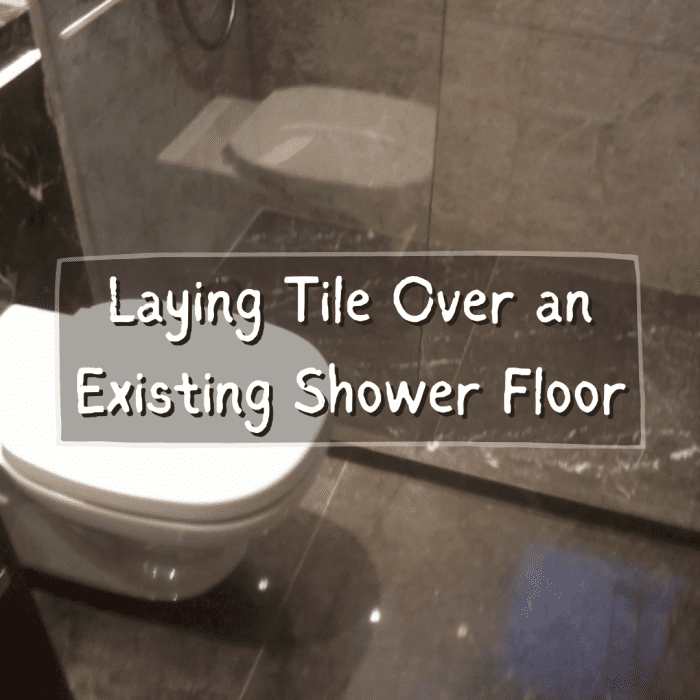
Read on to learn how to tile over an existing shower floor! A new tile shower floor helped transform this common bathroom into a work of art.
Past Famrnylongras – CC-BY-SA-3.0 | Wikimedia Commons
Can You lot Tile Over Tile in a Shower Floor?
As a tile shower flooring ages, its imperfections quickly turn into an eyesore.
- Each settlement crack in the grout creates a pathway for h2o to seep into the concrete subfloor. A depression spot lets h2o pool. Both of these issues promote mold and mildew growth in the grout and subfloor, which darkens the grout in the problem surface area.
- Many shower floors take cut tile with abrupt or crude-looking edges. The bad cuts tin turn an otherwise good-looking tile flooring into an non-expert-looking maintenance nightmare.
Laying a new layer of tile over the existing shower flooring tin can solve these issues without removing the old tile and grout. Beneath, you'll find instructions for prepping the onetime floor tile, installing new tile over information technology, and finishing the job.
Preparing the Existing Shower Floor
Most skilful tile setters will tell you that a high-quality tile project always starts with subsurface preparation. A tile shower flooring uses a mortar and sand mixture as a subfloor. The tile setter dry out packs the mortar mixture in the shower pan. He then cuts in the floor'southward gradient with a straightedge. Once dry out, the mortar gives the tile a solid surface to rest on. An improperly created subsurface causes high and depression spots in the finished floor. Sometimes it takes every bit long to prepare the subsurface as information technology does to lay the tile.
How to Prep the Floor
- Remove the shower drain cover and gear up it aside.
- Stuff a rag into the acme of the drain pigsty. The rag prevents debris from falling down into the drainpipe.
- Concord 1 end of a chimera level on the drain opening and slide the other terminate of the level across the existing tile's surface to check the flooring's gradient. When measured from the drain opening to the furthest wall, the level should show about i/4-inch of gradient per foot. Slide the level beyond the flooring and mark all high and depression areas with a wax pencil or permanent mark.
- Put on all condom equipment, including safety glasses and leather work gloves.
- Remove whatever raised tile using a hammer and chisel. Practise not worry about damaging the neighboring floor tile. A single raised tile can hold enough water to create a puddle.
- Remove all of the old caulking material from the perimeter of the shower floor, including the caulking covering the bottom vi inches of each of the wall's corners.
- Thoroughly clean the unabridged shower stall, using any household cleaner that removes lather scum and difficult-water deposits.
Fixing the Slope
- Mix a white-colored thinset in a bucket, using the thinset manufacturer's instructions. White-colored thinset will non bleed through the new shower tile's grout.
- Dampen the floor with h2o.
- Fill any dips or missing tile in the existing tile floor with the thinset, using a flat trowel to feather the thinset into the surrounding tile.
- If the existing shower floor does not accept the proper slope, build up the depression area with thinset.
- Run a straightedge beyond the flooring's surface and shave off whatsoever high areas of thinset.
- Let the thinset dry before continuing.
- Double-check the flooring for slope and dips with the level. Proceed to add together thinset to the problem areas, equally needed. If the added thinset created a high spot, rub the high spot with a sanding rock or cinder cake.
- Make clean up all of the debris.
Preparing the Drain
- Mount a shower drain extension ring, a 1/4-inch-thick plastic band, on top of the existing shower drain. The extension ring's mounting screws secure the ring against the acme of the existing shower drain opening. Apply a ring of the same diameter as the existing shower floor bleed opening. Most extension rings bolt straight to a four-inch diameter round bleed opening.
- After the new tile floor dries, the ring volition hold the bleed comprehend affluent with the new shower floor tile's finished surface.
- An adapter can convert a round bleed cover into a square cover. The square encompass makes cutting the tile around the opening easier. If using a square cover, mountain the adapter to the extension ring now.
Installing the Shower Floor Tile
- Make a bucket of white-colored thinset, using the manufacturer's moisture-mix ratio, if applicative. Most shower floors crave about 1 gallon of thinset.
- Spread the thinset on the shower floor with a notched trowel, starting at the far corner and working toward the shower adjourn. Only embrace equally much of the floor as you can reach with a canvass of tile. When working on a larger shower flooring, consider laying about half of the tile at a fourth dimension, completing the far half first. If the thinset rolls with the trowel, add together a trivial more water to the mixture.
- Position the first full canvas of shower floor tile confronting the most visible corner. If you are working in a larger shower, start at a far corner and work back toward the door. Shower floor canvas tile has several rows of modest tile that are held together with a mesh backing. The small pieces permit the tile follow the slope of the floor. The backing keeps the grout joints between each small slice even. Lay each full sail of uncut tile on the shower floor.
- Do not install the tile surrounding the drain opening or any cut pieces of tile nigh the shower walls yet. Adjust each full sheet of tile until the grout joints betwixt the sheets friction match the joints between the individual pieces of tile. Lightly tamp the tile into the wet thinset with a grout float.
- Measure the space between the full sheets of tile and the adjacent wall. Transfer the measurement to a sheet of tile. Layout the cuts surrounding the drain opening, using the bleed cover as a template. Make the cuts with an electric tile cutter or a prepare of tile nippers. Set up the cutting tile in their corresponding spots on the shower floor. Lightly printing the shower floor tile into the wet thinset with a clean grout float. Wipe whatever excess thinset from the grout joints with a wet sponge.
- Check the floor for high and low spots with the bubble level. Tamp loftier spots down with the grout bladder. Add together more thinset to whatever low tile. Launder the floor with a clammy sponge. Expect about one 60 minutes before continuing.
- Audit each grout joint for thinset. Often while tamping the floor, excess thinset will fill the grout joints. This thinset will bleed through the grout covering it. Once the floor has dried, any backlog white thinset will stand out against the grout; white grout makes white thinset await grey. Carefully run a handheld grout saw across any thinset. The saw's carbide blade will cut a groove in the thinset. Vacuum any droppings from the grout joints.
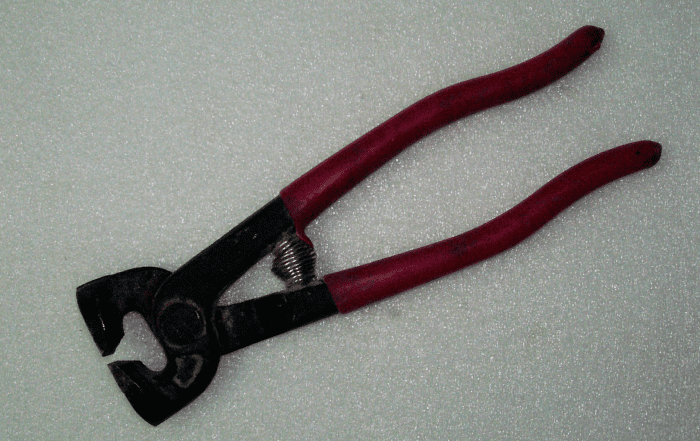
Utilise the nipper's blades to shape the tile so information technology fits tightly against the floor drain.
Scroll to Continue
Read More than From Dengarden
Finish the New Shower Floor
- Mix sanded tile grout, using the grout manufacturer'due south directions, in a bucket with water. Ever follow the manufacturer's powder grout to water ratio.
- Continue to stir the grout until all of the dry powder has mixed and the wet grout has a uniform color.
- Dump the grout on the tile flooring and printing the grout into the joints with a safe grout bladder. The grout must completely fill the cavity between each set of tiles.
- Cut in the corners with the edge of a margin trowel. The margin trowel will give the corners a 90-degree cutting.
- Clean the flooring with a clammy sponge, using round wiping motions. Await 24 hours earlier standing.
- Afterward the grout has stale, shine the tile'due south surface with a make clean dry out rag. Clean any leftover grout on the tile that the rag will non remove with white vinegar and a stiff-bristled nylon brush.
- Let the floor dry completely.
- Run a bead of tile caulking around the perimeter of the shower flooring, covering the floor-to-wall grout joint.
- Allow the caulking dry completely before using the shower.
This article is accurate and truthful to the best of the author's knowledge. Content is for informational or entertainment purposes but and does not substitute for personal counsel or professional person advice in business, financial, legal, or technical matters.
Questions & Answers
Question: My shower tile flooring doesn't have any cracks. Yet, I hate the style and color, and I want to install a pebble floor. Two tile setters have told me that it can be installed on top of the existing floor, but people at the tile store said it is was not a good idea. Now I am non sure what to do. What is your professional opinion?
Answer: As long as the existing floor is solid with no major settlement issues or loose tiles, then the tile setters are right. It is possible the tile salesman wants you to rip upwardly the old floor and subfloor so that he can sell you more than than merely the thinset and pebble-tile you need to give the shower a facelift.
Question: Would it be possible to tile over existing shower wall and ceiling tile? I have heard some mixed advice, and take seen very few related articles on the bailiwick.
Answer: I wouldn't want all the extra weight on the ceiling. I would non trust the drywall higher up to hold two layers of tile, grout, and thinset. The wall tile is oftentimes possible. However, other issues need to be kept in mind, such equally, the extra tile thickness means the shower valve often requires longer escutcheon screws, glass enclosure's size needs to exist adjusted, and then on.
Question: I take been told by several tilers that you cannot put tile over tile because it will crack. Are you lot sure you can do this successfully?
Answer: The new tile will not crevice when properly attached to a non-flexing solid subfloor. If your existing shower floor flexes, the new tile volition crevice in the same areas. Look for large grout or tile cracks that encounter the entire floor. These cracks are evidence of a subfloor problem that needs to exist addressed first.
Question: Is it possible to have the tile off of the shower curb and the walls to re-tile, just leave the existing shower floor tile in identify and follow the steps outlined here?
Answer: Aye, this is a common project.
Question: My tiles are crack due to foundation settlement. Tin I put new tiles over the cracked tiles?
Answer: The new tile will crack again if the foundation continues to settle. If you lot redo the shower floor, remove everything down to the subfloor. Brand sure the subfloor is solid and so install a pan membrane, slope the flooring, and install the tile. The membrane not only catches water seepage, simply it creates a barrier that prevents minor subfloor settlement cracks from transferring to the tile.
© 2022 Bert Holopaw
Related Manufactures

How To Repair A Tile Shower Floor,
Source: https://dengarden.com/remodeling/How-to-Lay-Tile-Over-an-Existing-Shower-Floor
Posted by: kimbroughhimend.blogspot.com
0 Response to "How To Repair A Tile Shower Floor"
Post a Comment